Why Broken Garage Door Springs Are Dangerous - Even When Your Opener Still Works
Imagine a technician inspects your garage and tells you it’s perfectly normal for an 18x10 door to need two people to lift it. Would you believe them? Well, you shouldn’t! That’s according to the Door and Access Systems Manufacturers Association (DASMA) Technical Director Dave Monsour, published in the Winter 2025 issue of Door and Access Systems. This is a major red flag, not a normal condition.
Many homeowners share a similar misconception: “My opener is still lifting the door, so everything must be fine.” While that is an understandable assumption, it’s one that can lead to costly repairs, damaged equipment, and serious safety risks.
In this article, we’ll explain what garage door balance actually means, why your opener isn’t designed to do the heavy lifting, how to tell if your garage door spring is broken or worn, and what you should do about it. If you're noticing any of the warning signs below, our
garage door repair services team can get a technician out to inspect your springs safely.
What Does Balance Mean for a Garage Door?
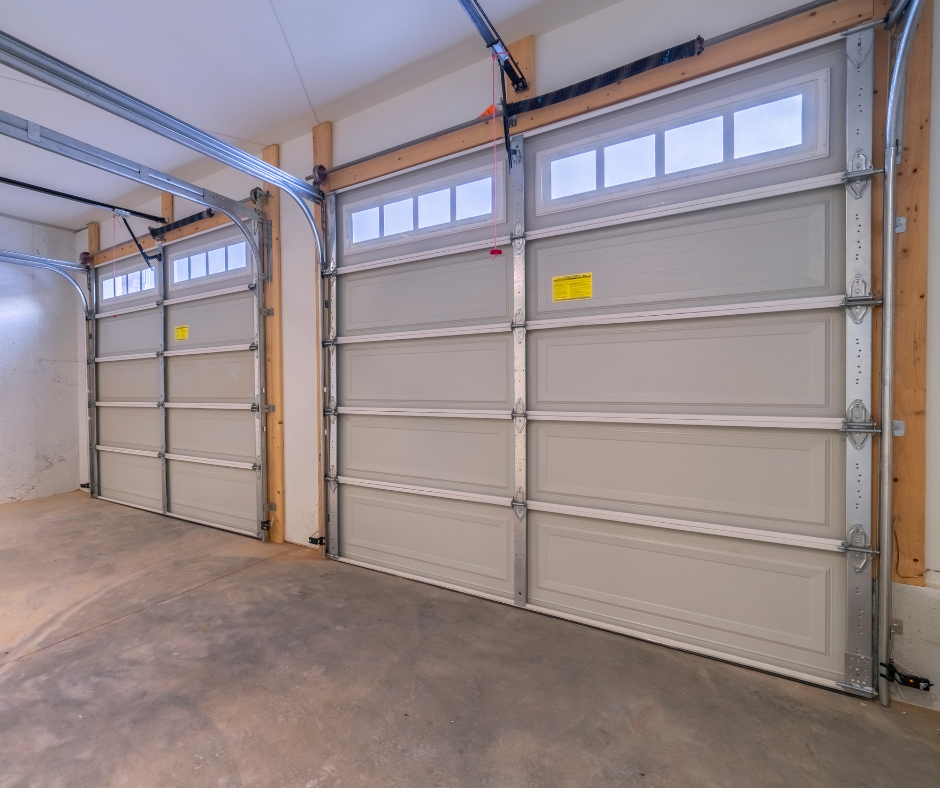
Almost every garage door uses large, strong torsion springs to counteract the door’s weight. Without them, even a mid-sized residential door could weigh 150 to 400 pounds - far too heavy for a motor operator or a person to handle safely on a regular basis.
Garage door balance refers to how well the springs are matched to the weight of the door. A properly balanced door opens and closes with minimal physical effort - the springs do the work so you don’t have to. When the balance is off, the door becomes noticeably harder (& heavier) to open and close manually, and every component in the system begins to pay a price.
The Two Types of Garage Door Springs
There are two main spring systems used in residential garage doors:
- Torsion springs: Mounted on a shaft directly above the door opening (the header). They wind and unwind to lift and lower the door. This is the most common spring type on modern residential doors.
- Extension springs: Stretch along cables above the horizontal tracks on each side of the door. They extend as the door closes and contract as it opens.
Both types serve the same purpose: to counteract the door’s weight so it lifts with minimal effort. When either type fails or loses tension, the balance of the entire system is compromised. Not sure which type is on your door? Our guide to replacing garage door springs breaks down how to identify torsion vs. extension springs before you call for service.
What a Properly Balanced Door Feels and Looks Like
A properly balanced garage door will:
- open and close with minimal physical effort when operated manually
- gently rest on the floor when closed - not slam or drop
- stay fully open at the header without drifting down
- hold its position when raised to about 3 to 4 feet off the ground
Here’s how to test the balance of your garage doors: Disconnect the opener by pulling the red emergency release cord. Lift the door manually to about waist height, then let go. A properly balanced door will stay in place on its own. If it drops to the floor or shoots upward, your door is out of balance and needs professional attention. This is a difficult and potentially unsafe job for a DIYer.
What Is the Motor Operator Actually Supposed to Do?
This is one of the most common misconceptions and important things to understand about your garage door system: the motor operator is designed to be a convenience device, not a workhorse. It is designed to operate the door mechanism and handle small imperfections in balance, not to carry the full weight of an unbalanced or spring-deficient door.
The springs carry the load. The motor just operates the mechanism.
The Opener Is a Convenience Tool, Not a Workhorse
A little more on the subject of the opener and its purpose. Whether or not your opener is “strong enough” to lift the door is the wrong question. A door may be able to lift with broken or weakened garage door springs - but it absolutely should not be relied upon to do so. Every cycle you run under those conditions is putting unnecessary stress on a device that was never engineered for that job.
Here’s an easy way to look at it: your car’s engine can technically run without oil for a while - but you wouldn’t drive it that way, because it will ruin the car. The same logic applies to operating your garage door with failed or failing springs. For a deeper look at how an overworked opener fails and what that repair actually costs, see our related post on the difference between opener strain and spring failure.
Warning Signs That Your Opener Is Being Overstressed
Knowing how to tell if your garage door spring is broken - or simply worn - can help you catch the problem before it becomes a costly failure. Watch for these signs that your opener is working harder than it should:
- The door moves slower than usual when opening or closing
- Straining or grinding sounds come from the motor unit
- The opener reverses or stops mid-cycle for no apparent reason
- The motor feels warm or hot to the touch after operation
- The door requires multiple attempts to open fully
Why Using a Garage Door With Broken or Weak Springs Is Dangerous
Garage door spring safety isn’t just a technical or functional concern - it’s a real physical hazard. DASMA identifies three primary dangers that arise when broken garage door springs are ignored or masked by an opener. Any one of these can result in a door falling rapidly, which should always be avoided.
Risk 1: Other Door Components Can Fail
A garage door is a system, and every part of that system is designed to work under the assumption that the springs are properly balancing the door’s weight. When that balance is lost, vulnerable components, including cables, cable drums, hinges, rollers, and tracks, all take on stress they weren’t designed to handle.
A single failing part can trigger a chain reaction. A fraying cable snaps. A bent track jams the door mid-travel. A hinge cracks, and the door panel shifts. What started as a worn spring can quickly become a full door system failure - and a serious safety hazard.
Risk 2: The Motor Operator Can Burn Out
When the springs are weak or broken, the opener is forced to carry a load it was never designed for. This kind of persistent overloading significantly shortens the lifespan of the motor. In the best case, you’re facing a premature replacement - an avoidable expense that can run several hundred dollars or more.
In the worst case, the motor fails mid-operation: either leaving the door stuck open (a security and weather risk) or causing it to drop unexpectedly. A sudden, uncontrolled drop of a heavy garage door is exactly the kind of dangerous situation garage spring repair is designed to prevent.
Risk 3: A Dangerous Underlying Problem Is Being Ignored
When a door is out of balance, it signals that something in the design, installation, or ongoing maintenance of the system has not been adequately addressed. Using the opener to power through that problem doesn’t fix it - it masks it.
The longer an underlying balance issue goes unaddressed, the more severe the eventual failure becomes. Replacing garage door springs at the first sign of trouble is always less expensive and less dangerous than waiting for a breakdown. If you'd rather not wait for a breakdown, our page on
when to replace garage door springs walks through the timing signs in more detail.
What Causes Garage Door Spring Imbalance?
Spring problems aren’t always the result of neglect. In fact, most homeowners never see their springs fail catastrophically - the more common issue is gradual wear that quietly undermines the system over time.
Spring Wear and Loss of Tension Over Time
Springs of all kinds relax and lose tension over time - even without snapping. This is normal mechanical wear, no different from a shock absorber gradually softening or a belt slowly stretching. The industry standard lifespan for a garage door spring is approximately 10,000 cycles, where one cycle equals one full open-and-close sequence.
For a family that uses the garage door four times a day, that’s around 7 years before the springs are likely to need attention. High-use households often reach that threshold even sooner.
Production, Installation, and Field Variances
No garage door system is perfectly calibrated right out of the box. All door assemblies and their components are subject to normal variances in manufacturing, installation, and real-world field conditions. Even a brand-new door can have minor balance imperfections from day one.
Over time, these small variances compound with natural wear, making regular professional inspection an important part of ownership - not just something you do when something breaks.
The Warning Signs You Should Never Ignore
Remember the scenario we opened with: a homeowner was told it was “normal” for their 18x10 door to require two people to lift it. It is not normal. If it takes two people to lift an 18x10 door, something is seriously and perhaps dangerously wrong. That door is failing a basic garage door balance test every time someone tries to use it manually.
Here’s how to tell if your garage door spring is broken or struggling:
- The door feels unusually heavy when lifted manually
- The door doesn’t stay at waist height when you release it during a balance test
- You hear a loud bang from the garage, often a sign that a torsion spring has snapped
- You can see a visible gap in the torsion spring coils above the door
- The door moves unevenly or tilts from side to side as it travels
- The door slams to the floor when released instead of lowering gently
How Severe Can Garage Door Imbalance Get? (And What DASMA Recommends)
Not all spring imbalances are equally dangerous. Severity depends on the size of the door, its design, and how long the problem has been present. Small imperfections in a lightweight door may be barely noticeable; the same imperfections in a large commercial-style door can create a genuinely hazardous situation.
DASMA recommends annual inspections and maintenance by a trained door systems technician. Consulting your door’s manufacturer for model-specific guidance is also advisable. Annual tune-ups are the most effective way to catch spring wear early, keep your system in peak shape, and avoid unexpected failure that puts people and property at risk, and keep your
door systems running smoothly year-round.
What to Do If You Suspect a Spring or Balance Problem
If you’ve noticed any of the warning signs above, here’s what to do:
1. Stop using the door as normal. Don’t continue relying on the opener to power through the problem.
2. Perform the balance test. Disconnect the opener, lift the door to waist height, and release. A balanced door stays put.
3. Do not attempt to replace torsion springs yourself. Torsion springs are under extreme tension and can cause serious
injury if mishandled. This is not a DIY repair.
4. Call a trusted garage door technician. Ask specifically for a full balance and spring inspection, not just a visual check. If you're in the Lee's Summit or greater Kansas City area, the team at
Door Systems Inc. is ready to help. We perform comprehensive garage door spring repair and annual maintenance to keep your system operating safely.
Frequently Asked Questions
What does garage door balance mean?
Garage door balance refers to how well the springs are matched to the weight of the door. A balanced door opens and closes with minimal effort and holds its position at any height without drifting. When balance is correct, the springs do the heavy lifting, not you, and not the motor.
Can I use my garage door if a spring is broken?
Technically, a door may still move with a broken spring, but it shouldn’t. Using the door with broken garage door springs puts extreme stress on the opener, cables, tracks, and other components and significantly increases the risk of a sudden, uncontrolled failure. Stop using the door normally and call a technician.
Isn’t the motor operator strong enough to lift the door on its own?
Whether the opener can lift the door is the wrong question. Motor operators are designed for convenience and handling minor imperfections in balance, not for carrying the full weight of an unbalanced door. Forcing an opener to do that job causes premature wear and risks sudden failure.
How do I know if my garage door springs are worn out?
Common signs include a door that feels heavy to lift manually, fails the balance test, moves slower than usual with the opener, produces straining sounds from the motor, moves unevenly, or slams when released. A visible gap in a torsion spring coil is a clear sign of a break.
How often should garage door springs be inspected?
DASMA recommends annual inspections by a trained door systems technician. Annual tune-ups catch spring wear before it becomes a problem and keep every component of the system in proper working order.
Can I replace garage door springs myself?
Unless you are an experienced garage door repairman, that would be a hard no. Torsion springs, the most common type on modern garage doors, should only be handled by a trained professional. They are under extreme tension and can cause severe injury, even death, if mishandled. The risk is not worth it. Call a qualified garage door technician.
What is the lifespan of garage door springs?
Most garage door springs are rated for approximately 10,000 cycles (one open + one close = one cycle). For a household using the door four times a day, that’s roughly seven years. Springs can also lose tension gradually before they snap, so age and feel matter as much as visible condition.
Is it normal for a large garage door to need two people to lift it?
No. If a large door like an 18x10 requires two people to lift, something is seriously wrong with the spring balance. A properly balanced door, regardless of its size, should open with minimal physical effort from one person. This is a situation that requires immediate professional inspection.
Schedule Your Garage Door Spring Inspection in Lee's Summit Today
If anything in this article sounded familiar, like a heavy door, a straining opener, or a bang you heard last week, don't wait for the problem to get worse. The team at Door Systems Inc. has been serving Lee's Summit and the greater Kansas City area since 1970, and we know how to catch spring and balance issues before they become dangerous failures.
Call us at 816-524-8535 or contact us online to schedule a professional inspection. We'll give your door a full balance and spring evaluation, not just a visual check, so you know exactly where things stand.